If surgery has been recommended for you or your child, you will naturally want to understand why it is needed, how it is done and what recovery will involve.
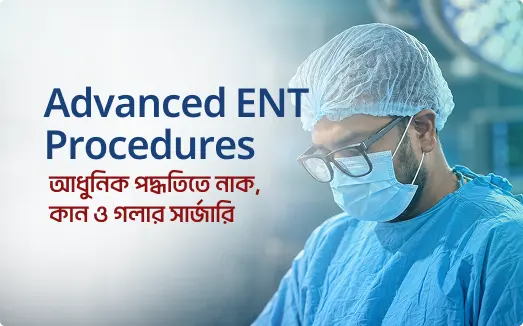
Explore the procedures below, or consult Dr. Md. Abdullah Al Mamun to discuss which approach may suit your condition.
Book an Appointment
Repeated tonsillitis can mean missed school, missed work and another difficult week of swallowing. Enlarged tonsils can also interfere with breathing during sleep.
Coblation uses radiofrequency energy to remove tonsil tissue at a lower temperature than conventional electrocautery. Depending on the condition, surgery may remove the whole tonsil or leave a thin layer of tissue over its covering.
The technique and extent of removal both affect recovery. Pain and bleeding are still possible, so understanding the aftercare is an important part of preparing for surgery.
A child who regularly breathes through their mouth, snores heavily or has pauses in breathing during sleep may have enlarged adenoids and tonsils.
Adenotonsillectomy removes the adenoids and tonsils when there is a clear reason to treat both. Endoscopic assistance gives the surgeon a detailed view of the adenoid area behind the nose during removal.
An assessment helps determine whether surgery is appropriate. Snoring alone does not automatically mean a child needs an operation.
When sinus symptoms keep returning or do not settle with appropriate treatment, endoscopic sinus surgery may be an option. It can help selected patients with chronic sinusitis, nasal polyps, recurrent infections or certain forms of fungal sinusitis.
Using a small camera and instruments through the nostrils, the surgeon opens affected sinus pathways and removes obstructing tissue where needed. Nasal sprays, rinses and follow-up may still be necessary to keep inflammation under control.
A hole in the eardrum can lead to repeated ear infections, discharge or reduced hearing. If it does not heal, myringoplasty may be recommended to repair it.
The endoscopic approach lets the surgeon work through the ear canal, using a small camera and a tissue graft to close the hole. The aim is to help the ear stay dry and reduce infections; hearing may also improve.
The repair does not always heal successfully. Keeping the ear dry during recovery and attending follow-up appointments help protect and assess the graft.
If a bent nasal septum is restricting airflow, you may find one side of your nose feels persistently blocked.
Endoscopic septal surgery, or endoscopic septoplasty, uses a camera to guide correction of the partition inside the nose. Its purpose is to improve airflow rather than change the nose’s appearance.
Other causes of blockage, such as allergies or enlarged turbinates, may need treatment too.
The most suitable approach depends on your diagnosis, anatomy and the intended benefit. Ask why a particular technique is being recommended and what other options are available.
Some procedures allow you to go home the same day; others require overnight observation. Your age, general health, operation and recovery from anaesthesia all affect the plan.
Make sure you understand the expected benefit, possible complications, time away from work or school, and follow-up arrangements.
After tonsil or adenoid surgery, fresh bleeding from the mouth or nose needs urgent medical assessment, even if it appears to stop.
Bring your previous reports, prescriptions and any questions you have. A consultation is a chance to understand the proposed treatment and decide on the next step.
Book an Appointment with Dr. Md. Abdullah Al Mamun