

When your nose stays blocked, your sense of smell fades, or sinus infections keep returning, it can be frustrating to go through treatment without lasting relief.
If you are wondering whether surgery could help, consult Dr. Md. Abdullah Al Mamun in Dhaka. Bring your previous reports and prescriptions so you can discuss what has been tried and what to consider next.
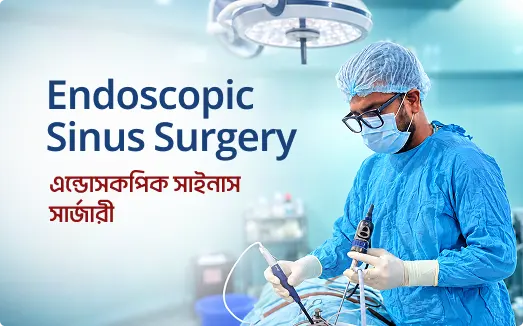
Endoscopic sinus surgery uses a small camera and fine instruments passed through the nostrils to treat problems inside the sinuses. It usually involves no external cuts.
The operation opens blocked sinus pathways and removes polyps or other material where needed. This helps mucus drain and allows prescribed nasal treatments to reach the sinuses more effectively. You may also hear it called Functional Endoscopic Sinus Surgery, or FESS.
A blocked nose, discharge, facial pressure or reduced smell lasting 12 weeks or longer may indicate chronic sinusitis. It involves ongoing inflammation, rather than simply an infection that needs another course of antibiotics.
Surgery may be considered when symptoms continue to affect daily life and an assessment suggests it could offer more benefit than medical treatment alone.
Some people feel well between episodes but develop sinus infections repeatedly. Before considering surgery, it is important to confirm that these are separate sinus infections and look for factors contributing to them.
For selected patients, opening affected sinus pathways may help reduce further episodes.
Nasal polyps are soft, non-cancerous growths inside the nose or sinuses. They can block breathing and reduce your sense of smell.
Medication may shrink them or control symptoms. When this is not enough, surgery can remove the polyps and open the affected sinuses. Continued treatment is often needed because polyps can grow back.
Fungal sinusitis has several forms, and treatment depends on which one is present. A fungal ball may need surgical removal, while allergic fungal sinusitis often requires surgery followed by ongoing treatment to control inflammation.
Invasive fungal sinusitis is a different, serious condition that needs urgent specialist care, often including surgery and antifungal medicine. Antifungal medication is not necessary for every type of fungal sinusitis.
Your symptoms, previous treatment and the effect on your daily life all matter. Nasal endoscopy helps examine the inside of your nose, and a CT scan is used to plan surgery when needed.
Before deciding, you should understand what the operation is likely to improve, what alternatives remain and what follow-up will involve. A scan finding alone should not determine the decision.
Surgery can provide meaningful relief, but it does not always remove the underlying tendency to inflammation. Nasal rinses, prescribed sprays and follow-up may remain part of your care, particularly if you have polyps or allergic fungal sinusitis.
Some blockage, mild discomfort and light bleeding are common initially. Many people return to desk work within about one to two weeks, although healing continues for longer. Your surgeon will explain when to restart exercise and how to care for your nose.
Possible complications include bleeding and changes in smell. Rare but serious risks include injury around the eye or leakage of the fluid surrounding the brain. Your surgeon should explain the risks relevant to your operation.
You do not need to arrive knowing whether you want surgery. Start with your symptoms, your concerns and the treatments you have already tried.
Book an Appointment with Dr. Md. Abdullah Al Mamun